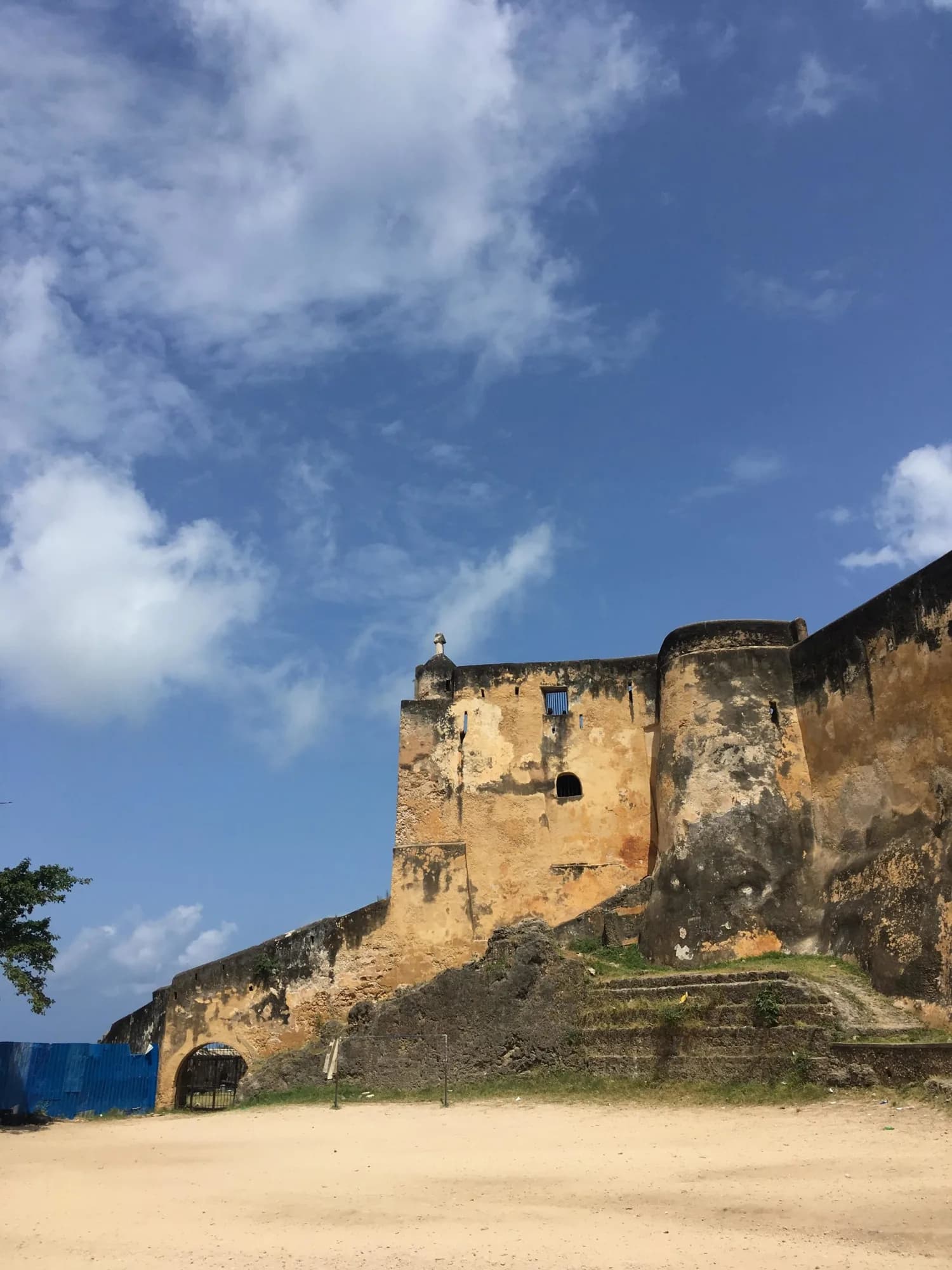
I've walked guests through Fort Jesus more times than I can count, and the question I get most often afterward is some version of "I didn't expect there to be that much inside." The walls are what you see from the street, but the museum inside them is where the fort's four centuries of history actually gets explained. Here's what's worth your time once you're through the gate.
Contents
- The short answer
- A fort that changed hands nine times
- What's inside the museum
- The sunken frigate
- Tickets, hours, and timing your visit
- FAQ
The short answer
Fort Jesus is open daily from 8am to 6pm, tickets are booked through Kenya's eCitizen platform rather than paid in cash at the gate, and you should budget 60 to 90 minutes to see the fort and museum properly (National Museums of Kenya). The museum galleries, the excavated artifacts from coastal sites like Gede and Manda, and the weekly sound and light show are the parts most visitors underestimate going in — plan for more than a quick walk around the ramparts.
A fort that changed hands nine times
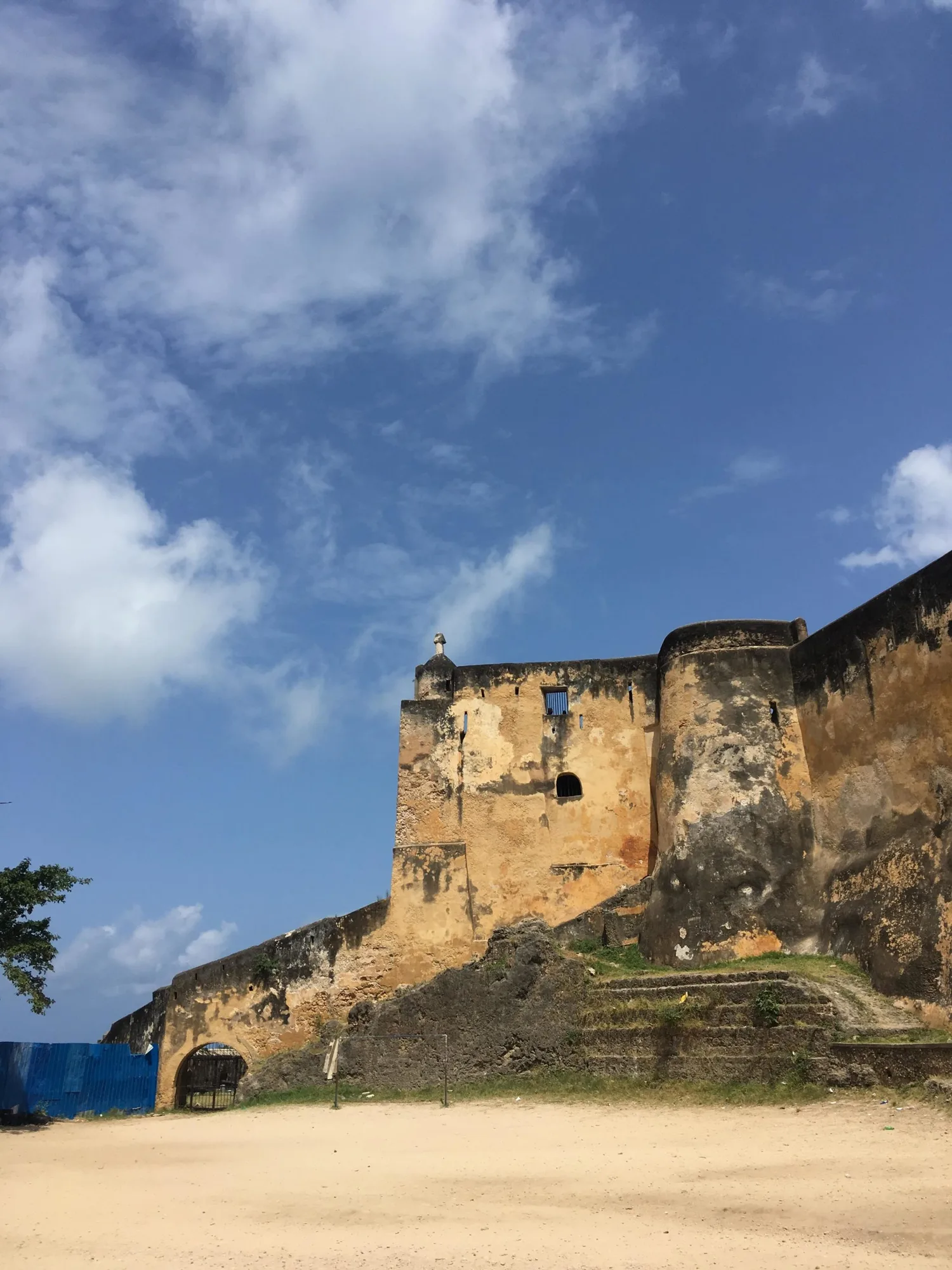
Fort Jesus was built by the Portuguese between 1593 and 1596, designed by Italian architect Giovanni Battista Cairati to defend Mombasa's harbor, and its layout still reflects Renaissance ideas about proportion and geometry — the angular bastions were built so that any attacker scaling one wall would come under fire from another (UNESCO World Heritage Centre). The Portuguese held it for roughly a century before losing it to Omani Arabs after a long siege between 1696 and 1698. From there it changed hands repeatedly between Portuguese, Omani, and eventually British control, who converted it into a prison in 1895. It became a national monument in 1958, opened as a museum in 1962, and was formally recognized as a UNESCO World Heritage Site in 2011 (National Museums of Kenya).
That number of transitions — at least nine changes of control across three centuries — is part of what makes a guided walk through the fort worthwhile rather than a solo wander. Almost every wall, doorway, and gun emplacement belongs to a different chapter of that history, and it's easy to miss which is which without someone pointing it out.
What's inside the museum
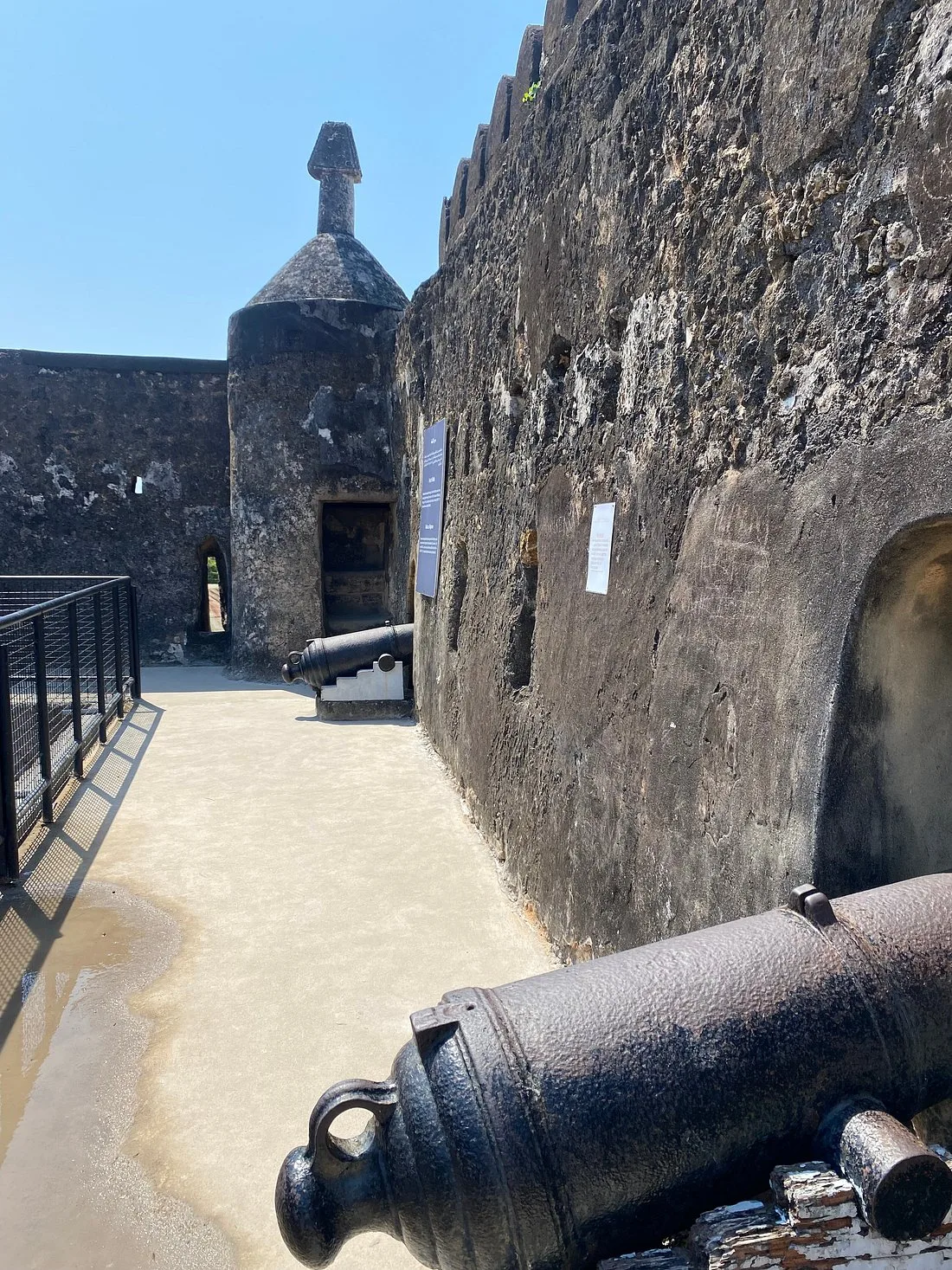
- Military relics and cannons — armaments from across the fort's Portuguese, Omani, and British periods, several still in their original gun emplacements along the walls.
- Archaeological collections — pottery, ceramics, and artifacts excavated from coastal sites including Gede, Manda, and Ungwana, tracing Swahili coastal civilization back well before the Portuguese arrived.
- Trade-era artifacts — barnacled earthenware jars, Persian amulets, and Chinese porcelain that arrived through the same Indian Ocean trade routes covered in our Old Town food guide, physical evidence of just how far this port's trading reach extended.
- The Swahili Cultural Centre — established in 1993 within the museum grounds to train young Kenyans in traditional Swahili crafts, and a good stop if you want to see craftsmanship rather than only artifacts behind glass.
The sunken frigate
One of the museum's most significant holdings isn't inside a case — it's the recovered material from the Santo António de Tanná, a Portuguese frigate that sank in Mombasa's harbor in 1697 during the long Omani siege of the fort. Maritime archaeologists have recovered ceramics, weaponry, and ship components from the wreck over the years, and selected pieces are displayed in the museum's galleries. It's a rare, well-documented underwater archaeology find for this part of the Indian Ocean, and worth asking a guide to point out specifically if it isn't obviously labeled on the day you visit.
Tickets, hours, and timing your visit
- Book ahead through eCitizen. Cash isn't accepted at the gate — tickets for residents, non-residents, and students are all handled through Kenya's official eCitizen platform, so it's worth booking before you arrive rather than at the entrance.
- Go in the morning if you can. Cruise ship days and tour groups tend to arrive from mid-morning, and the coral stone surfaces hold heat — an earlier visit is more comfortable in every sense.
- Ask about the sound and light show. The fort runs a weekly evening show that narrates its history against the walls themselves — check current scheduling when you book, since it isn't a nightly event.
- Wear real shoes. The surfaces inside the fort are original and uneven in places, and flip-flops make the steeper passages harder than they need to be.
- Pair it with Old Town. Fort Jesus sits at the edge of Old Town's streets and spice market, so it makes sense as the anchor of a longer walk rather than an isolated stop — see our Old Town walking tour guide for how we usually route it.
FAQ
How long should I budget for Fort Jesus?
60 to 90 minutes for the fort and museum together, longer if you're taking a guided tour or want to read through the full archaeological displays.
Can I buy tickets at the gate?
No — tickets are booked through eCitizen rather than paid in cash on arrival, so plan to book before you go rather than expect to pay at the entrance.
Is Fort Jesus worth visiting if I've already seen other African forts?
Yes — its UNESCO status comes specifically from how well-preserved its 16th-century Portuguese military architecture is, and the museum's archaeological collections from Gede and Manda add historical depth beyond the fort structure itself.
Is there a guide available on-site?
Yes, knowledgeable guides are available at the fort, and I'd recommend one on a first visit given how many distinct historical periods are layered into a single site.
Can I combine Fort Jesus with lunch in Old Town?
Yes, and it's one of the most natural pairings on the coast — several good Swahili restaurants sit a short walk from the fort gate, covered in our Old Town food guide.
Want Fort Jesus and Old Town built into a single well-paced day? Tell us your dates and we'll handle the timing and tickets, or see our Old Town walking tour for how it's already structured.